
BIG news! Dougy Center will open a new permanent home in Beaverton in early 2027.
August 13th, 2026
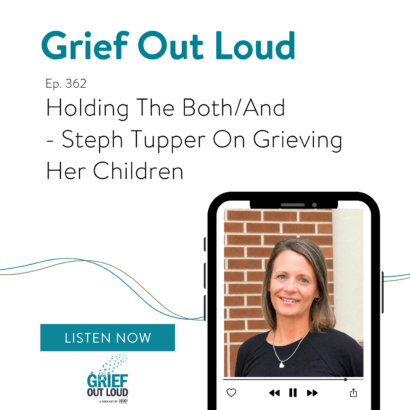
In 2022, Steph Tupper's two older children, Ali and Joe, were killed in a car crash. Ali was 16 and Joe was 14. Four years later, Steph is still learning how to live with the reality of losing her children while continuing to parent her youngest daughter. In this episode, Steph talks openly about the devastating night she learned Ali and Joe had died, the ways she continues to feel connected to them, and the complicated process of building a life around an absence that will never go away. She shares what she has learned about community, judgment from others - and herself, parenting after loss, and allowing grief to unfold without a timeline. In the last four years, Steph has learned how devastating pain and great joy can coexist, and how her capacity to carry grief continues to grow.
Go To Episode
Some people are private in their grief, some are more public, and some put their grief onto large public murals. Artist Max Collins joins us to talk about his powerful work creating murals for and wit read more...
Go to Episode
What is a legacy? What memories do children and teens value most? What prevents families from engaging in legacy activities? What can supportive friends and family do to help create these legacies? We read more...
Go to Episode
Today's conversation is with Karol Collymore about her mother, Julia. read more...
Go to Episode
Sue Klebold is the mother of Dylan Klebold, one of the two shooters at Columbine High School who, in 1999, killed twelve students and a teacher, and wounded more than 20 others before taking their own read more...
Go to Episode