
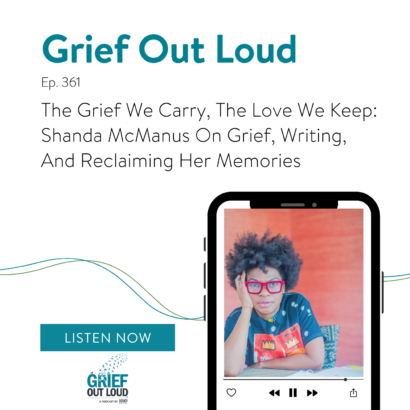
The Grief We Carry, The Love We Keep - Shanda McManus, MD
Aug 5th, 2026 | Episode 361
When physician and writer Shanda McManus was fourteen, her mother died after living with ovarian cancer. Three years later, her grandmother - the person who became home after that loss - was killed by a drunk driver. Then, while Shanda was in medical school, her younger brother Monir was murdered on Christmas Eve.
For years, surviving meant staying busy. Planning funerals. Managing paperwork. Pushing forward. The grief itself was boxed up, held in place by what Shanda describes as an emotional tourniquet. It kept her moving, but it also kept her separated from memories of her mother, grandmother, and brother - and even from parts of herself.
In this conversation, Jana and Shanda explore what finally made it possible to take off the tourniquet. They talk about how writing became a gentle way back into grief and how reconnecting with that grief also helped Shanda reconnect with the people who had died.
Together they also explore the larger forces that shape grief: the myth of the "strong Black woman," the culture of medicine that rewards emotional restraint, the isolation that follows homicide loss, and the ways race, class, and stigma influence whose grief is witnessed and whose is questioned.
This episode considers what can happen when we stop asking grief to disappear and instead start tending to it - creating space for tears, memories, stories, and relationships that continue long after someone dies.
In this episode, we discuss:
- Growing up in North Philadelphia and the lasting influence of Shanda's mother, grandmother, and younger brother.
- Becoming the family caretaker after her mother's death at fourteen.
- How repeated losses led to decades of suppressing grief in order to survive.
- Why writing Brother Epistles became a pathway back to memory, relationship, and self.
- The unique challenges of grieving after homicide and the stigma that often accompanies violent loss.
- How racism, gender expectations, and medical culture can leave little room for grief.
- What it means to tend grief rather than trying to finish it.
- Finding permission to speak about the people who died as an everyday grief practice.
Connect with Shanda McManus, MD https://www.shandamcmanus.com/ @shandaMDwrites Weatherproof Substack
Learn more about Dougy Center's grief education & training offerings: https://www.dougy.org/professionals-trainings
Support Grief Out Loud
"The best podcast out there for grievers and those interested in death and dying or working in that field. The host is so compassionate and asks the perfect questions. The guests are always very mindful and knowledgeable. I get something new out of every episode I listen to. Would highly recommend to anyone grieving as a tool towards resiliency through a really tough time."
Show your support for Grief Out Loud® and open up more conversations about grief by donating or subscribing today. Your donations keep this podcast free from advertising and your 5-star reviews help others find us.
Grief Out Loud® is supported in part by the Chester Stephan Endowment Fund in loving memory by the estate of Theodore R. Stephan.
Dougy Center, through the Grief Out Loud podcast, is committed to learning from and sharing diverse perspectives on grief experiences and grief support. The views expressed by podcast guests are their own and do not necessarily reflect the positions of Dougy Center, its staff, or its Board of Directors.